


Treatment of Non-hazardous Biodegradable Waste (R3/R1)
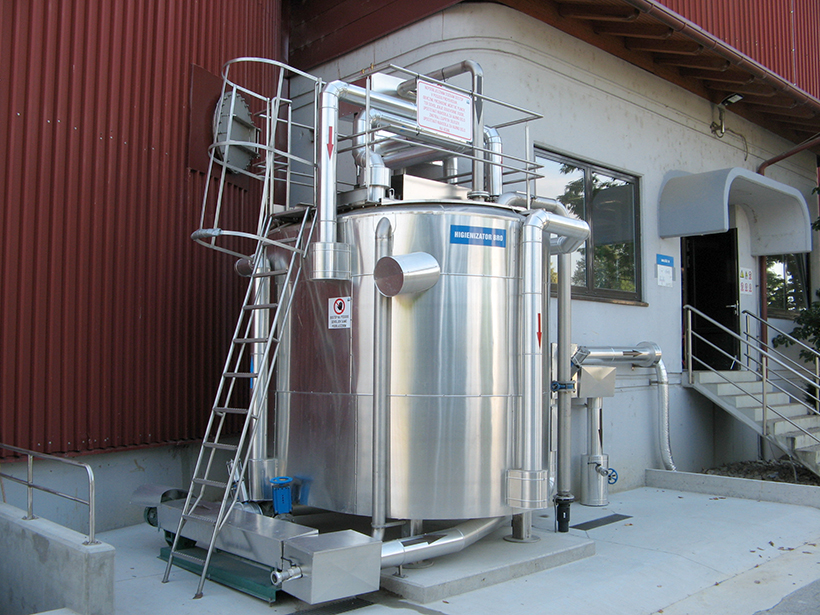
Next to the primary clarifier, there is a facility for receiving liquid biodegradable waste.
Non-hazardous biodegradable waste is processed using anaerobic decomposition and converted into biogas (operation R3/R1). 30 tons may be treated daily. Liquid waste is pumped from the storage tank into the hygienisation tank where heaters heat the liquid waste at 70 degrees Celsius for 1 hour. After the hygienisation, the liquid waste is pumped into a separate anaerobic digester of total volume of 1,800 cubic metres.
There the aerobic conversion of organic matter into biogas takes place over a period of 30 days at a temperature of approximately 39 degrees Celsius. The first stage involves acid hydrolysis, during which organic matter decomposes into short-chain fatty acids. Then follows the methanogenic phase in which methanogenic bacteria convert the fatty acids into biogas.
The resulting biogas is stored in the gasholder while the digested sludge undergoes a mechanical thickening in a centrifuge until the content of dry matter reaches approximately 30 percent. Thickened sludge is stored at the disposal site ready for final disposal. The pumps then transfer the water or centrate, the product of centrifugation, to a storage tank where it undergoes deammonification.
BIOGAS is a mixture of approximately 65 percent of methane, 34 percent of carbon dioxide and 1 percent of other gases. After digestion, the biogas passes from the gasholder through a column containing activated carbon, which removes impurities, such as organic silicon compounds, solvents and sulphide., The biogas is used to fuel biogas engines to produce electricity. The electricity produced covers over 90 percent of the plant's energy needs, and provides all the heat energy required by the wastewater treatment processes. Any excess electricity generated goes back into the electrical grid, while flares dispose of any excess biogas.
Tabel 1:
Waste Classfication – List of Waste (operation R3/R1)
Non-hazardous biodegradable waste (hygienisation of liquid waste)
| Klasifikacijska štev. odpadka | Naziv odpadka |
| 02 01 01 | Mulji iz pranja in čiščenja |
| 02 01 03 | Odpadna rastlinska tkiva |
| 02 02 03 | Snovi, neprimerne za uporabo ali predelavo |
| 02 02 04 | Mulji iz čiščenja odpadne vodena kraju nastanka |
| 02 03 01 | Mulji iz pranja, čiščenja, lupljenja, centrifugiranja in ločevanja |
| 02 03 04 | Snovi, neprimerne za uporabo ali predelavo |
| 02 03 05 | Mulji iz čiščenja odpadne vode na kraju nastanka |
| 02 04 03 | Mulji iz čiščenja odpadne vode na kraju nastanka |
| 02 05 01 | Snovi, neprimerne za uporabo ali predelavo |
| 02 05 02 | Mulji iz čiščenja odpadne vode na kraju nastanka |
| 02 06 01 | Snovi, neprimerne za uporabo ali predelavo |
| 02 06 03 | Mulji iz čiščenja odpadne vode na kraju nastanka |
| 02 07 01 | Odpadki iz pranja, čiščenja in mehanskega drobljenja surovin |
| 02 07 02 | Odpadki iz destilacije žganih pijač |
| 02 07 04 | Snovi, neprimerne za uporabo ali predelavo |
| 02 07 05 | Mulji iz čiščenja odpadne vode na kraju nastanka |
| 03 03 10 | Vlakninski rejekti (izvržki) in mulji vlaknin, polnil in premazov iz mehanske separacije |
| 03 03 11 | Mulji iz čiščenja odpadne vode na kraju nastanka, ki niso navedeni pod 03 03 10 |
| 04 02 20 | Mulji iz čiščenja odpadne vode na kraju nastanka, ki niso navedeni pod 04 02 19 |
| 07 05 14 | Trdni odpadki, ki niso navedeni pod 07 05 13 |
| 08 04 10 | Odpadna lepila in tesnilne mase, ki niso navedene pod 08 04 09 |
| 08 04 12 | Mulji lepil in tesnilnih mas, ki niso navedeni pod 08 04 11 |
| 08 04 14 | Vodni mulji, ki vsebujejo lepila ali tesnilne mase, ki niso navedeni pod 08 04 13 |
| 16 03 06 | Organski odpadki, ki niso navedeni pod 16 03 05 |
| 19 05 03 | Kompost, ki ne ustreza specifikaciji |
| 19 06 05 | Lužnica iz anaerobne obdelave živalskih in rastlinskih odpadkov |
| 19 06 06 | Pregnito blato iz anaerobne obdelave živalskih in rastlinskih odpadkov |
| 19 08 05 | Mulji iz čiščenja komunalnih odpadnih voda |
| 19 08 09 | Masti in oljne mešanice iz ločevanja olja in vode, ki vsebujejo le jedilna olja in masti |
| 19 08 12 | Mulji iz biološke obdelave tehnoloških odpadnih voda, ki niso navedeni pod 19 08 11 |
| 19 08 14 | Mulji iz druge obdelave tehnoloških odpadnih voda, ki niso navedeni pod 19 08 13 |
| 19 09 02 | Mulji iz bistrenja vode |
| 19 09 03 | Mulji iz dekarbonacije |
| 20 01 08 | Biorazgradjivi kuhinjski odpadki |
| 20 01 25 | Jedilno olje in maščobe |
| 20 02 01 | Biorazgradljivi odpadki |
| 20 03 02 | Odpadki z živilskih trgov |
| 20 03 06 | Odpadki iz čiščenja komunalne odpadne vode |
